For more than three decades, Martie Geiger-Ho has investigated kiln gods as a ceramist, ethnographic researcher, writer, and performance artist. Her work asks how potters give meaning to the uncertainty of fire—and how myths and rituals change as they move between ceramic communities and cultures.
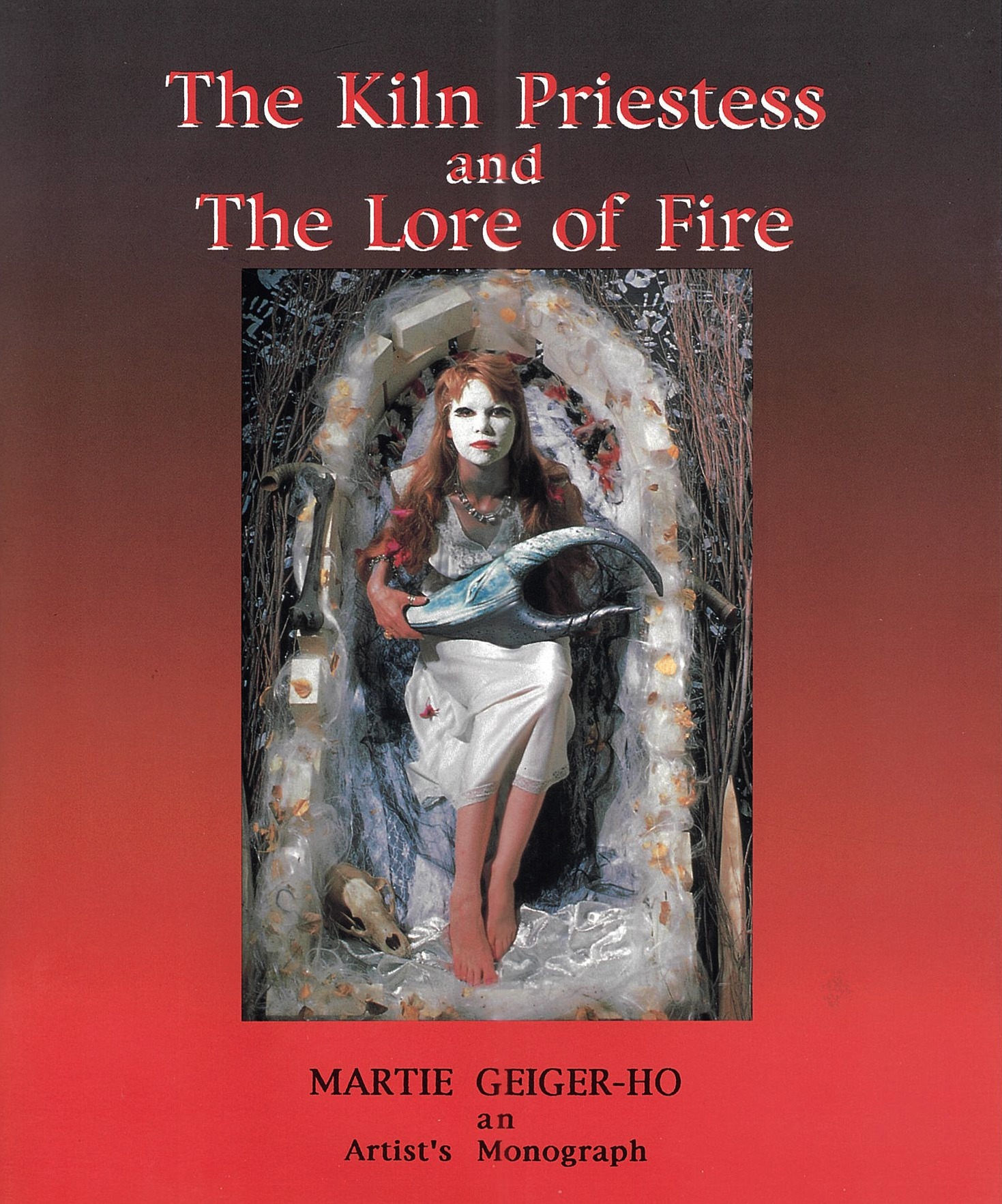
The Kiln Priestess and The Lore of Fire Martie Geiger-Ho’s first artist monograph, documents the early artistic roots of her kiln-lore research.
A practice-led inquiry
Research, fieldwork, performance, sculpture, and writing converge around clay, fire, ritual, cultural memory, and the potter's relationship with the kiln.
The Research Question
From American kiln guardians to Chinese kiln-god traditions
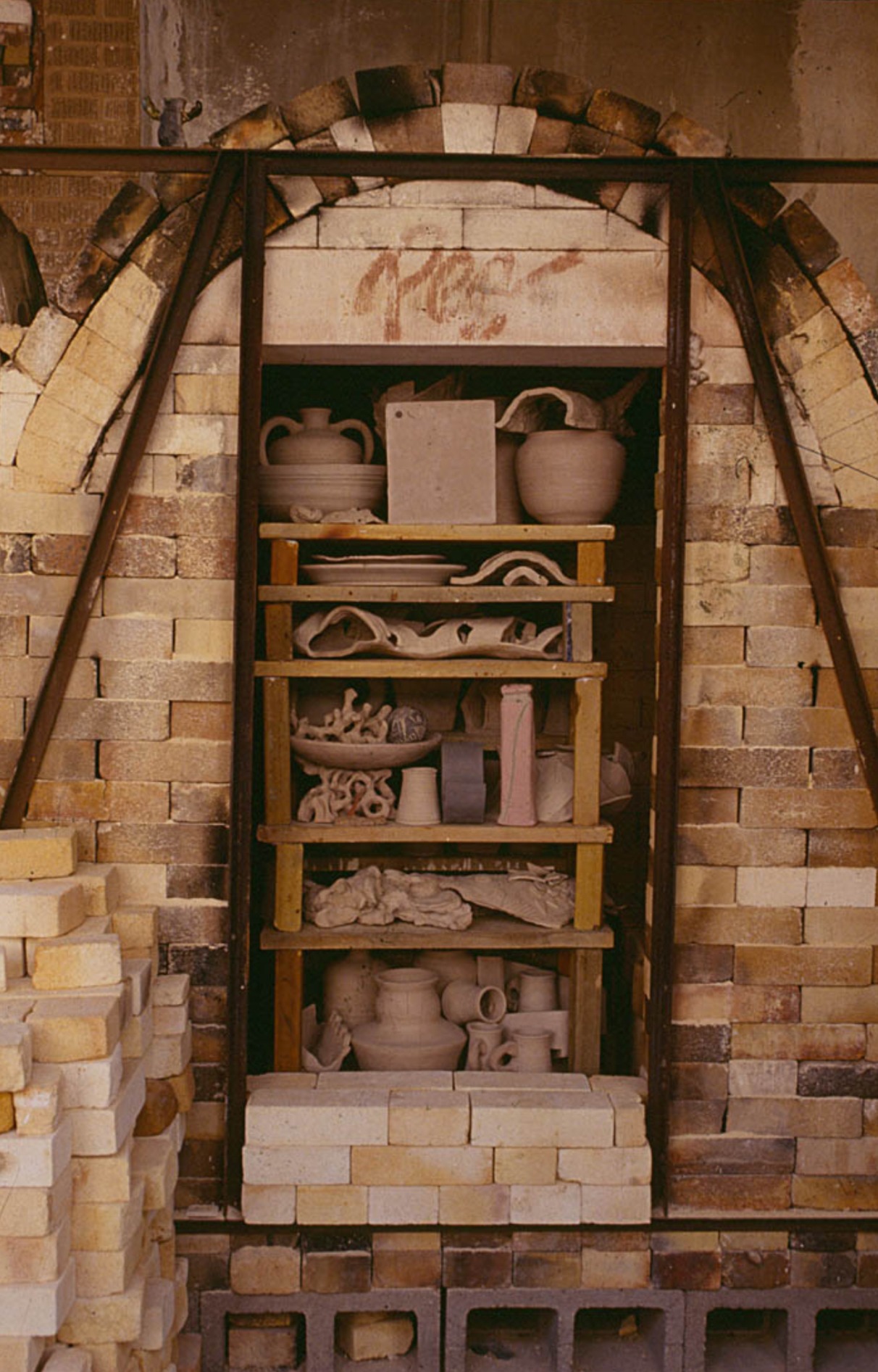
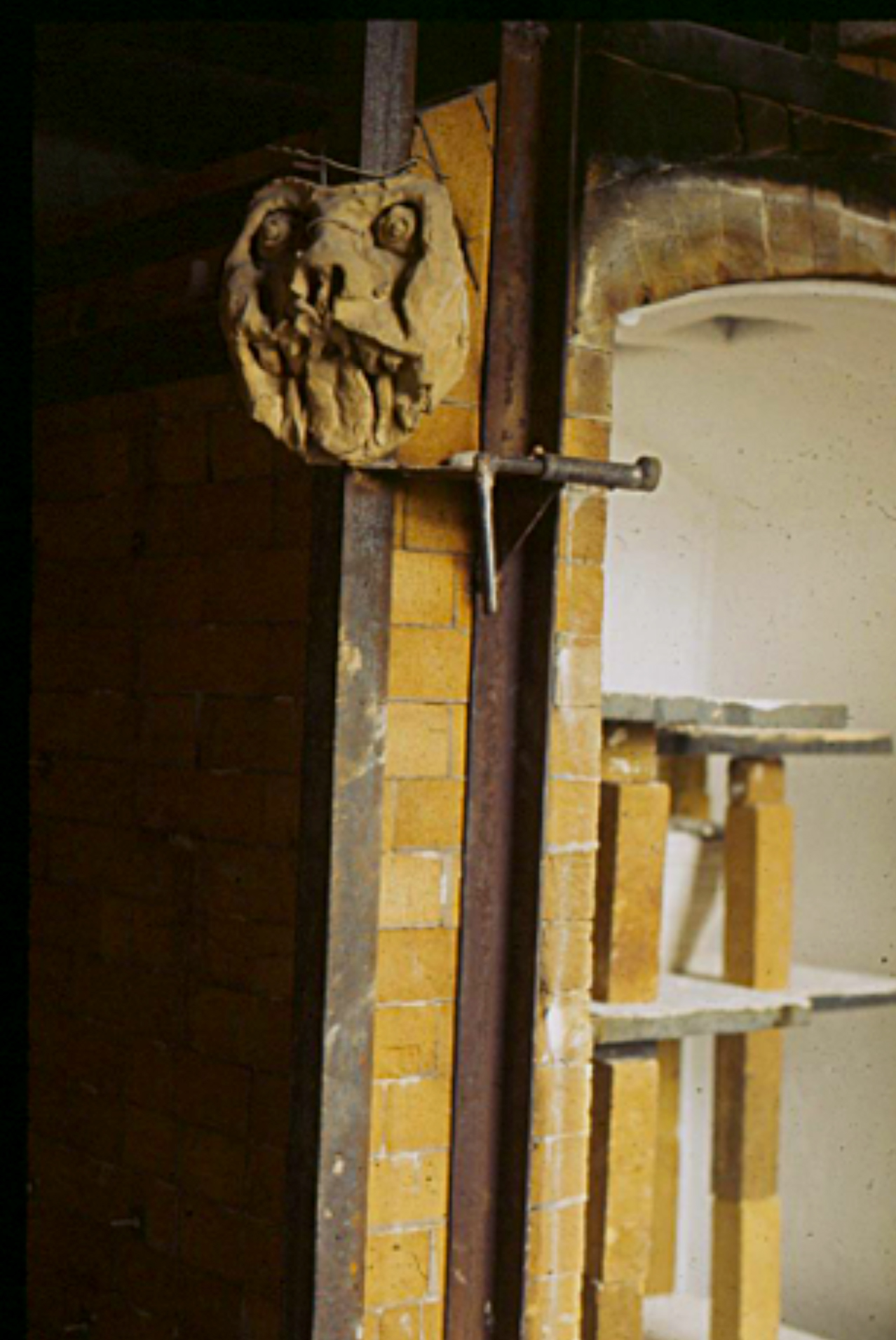
Martie's interest began inside American studio ceramics, where kiln gods are often spontaneously made clay figures placed near or above a kiln as charms or guardians. Seeking the origins of these practices led her beyond studio folklore toward a sustained investigation of Chinese kiln-god worship, mythology, temples, and ceramic communities.
Her doctoral study, Pathways of Transmission: Investigating the Influence of Chinese Kiln God Worship and Mythology on Kiln God Concepts and Rituals as Observed by American Ceramists, examined how kiln-god ideas were transmitted, interpreted, and transformed between Chinese traditions and American studio pottery.
“I became involved with the rituals and production of kiln guardians and in the researching of kiln lore because these activities are tied to my passion to connect with all aspects of ceramic making and to locate myself within these ceramic traditions.”
Explore the Field Research
Kiln-god traditions by location
Continue into the geographic research sections for photographs, field observations, deities, temples, kiln sites, and related publications.
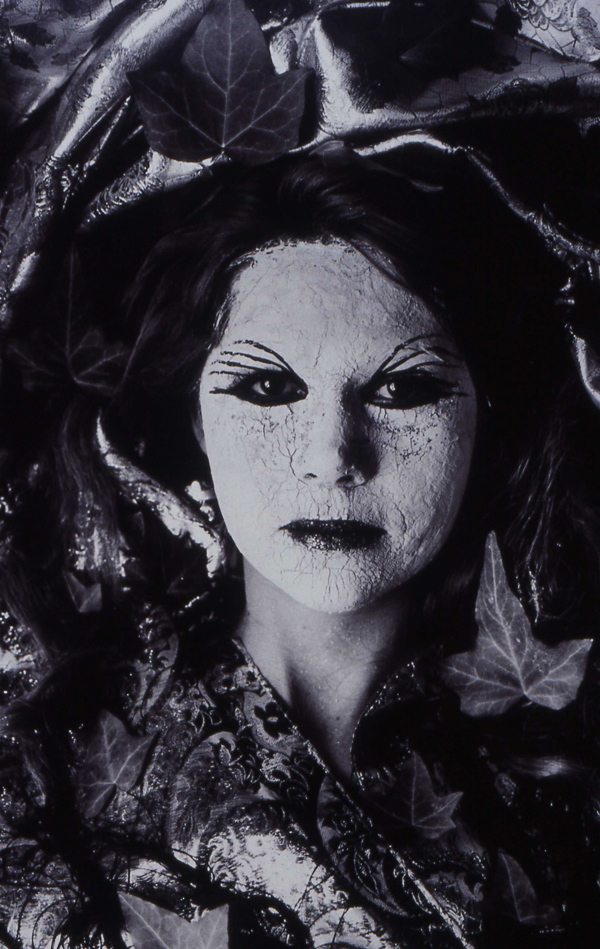
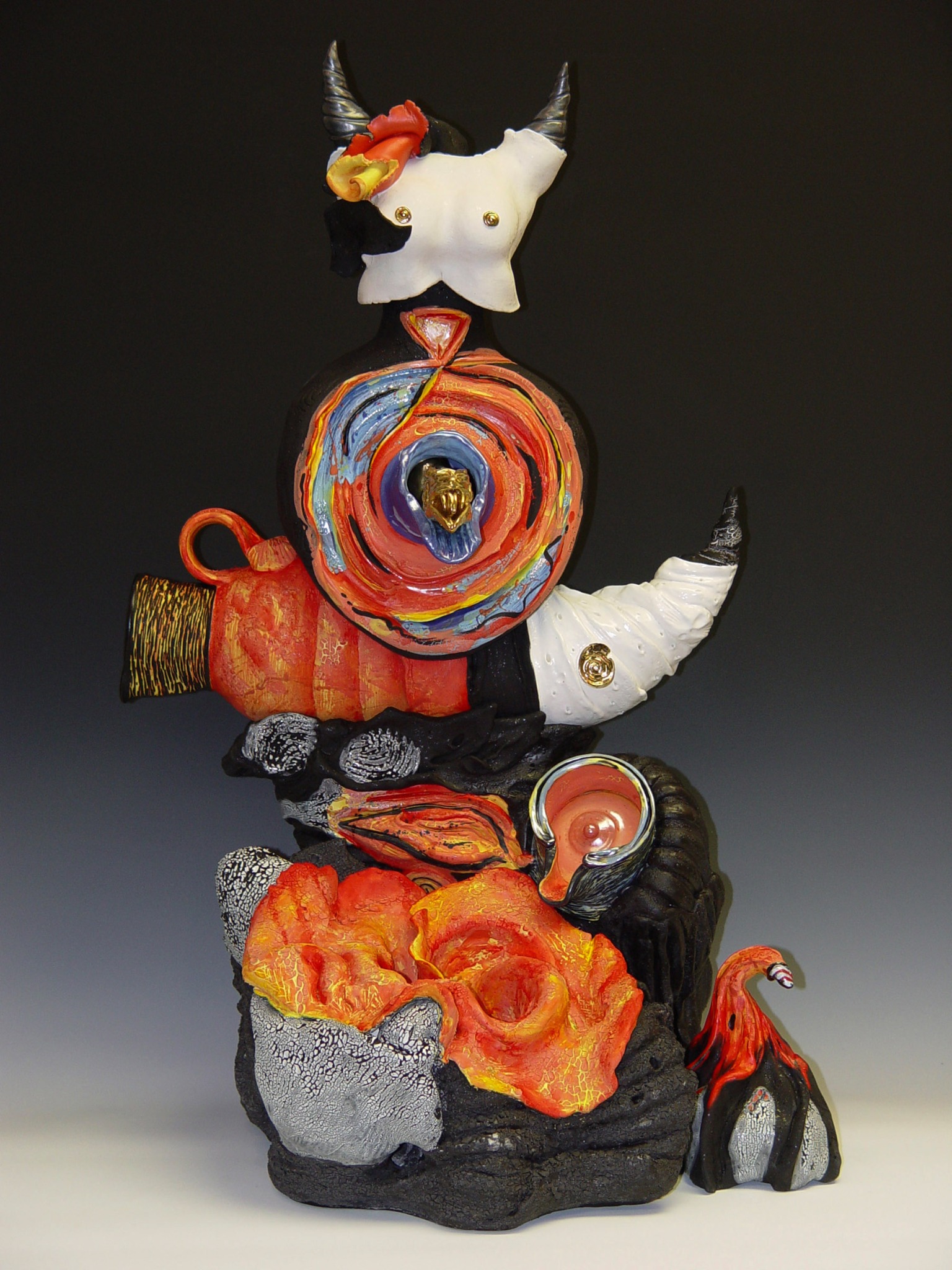
Martie first encountered kiln-god practices through American studio ceramics. These informal rituals—often centered on small, fanciful clay guardians—became the catalyst for asking where the mythology came from and how it had entered Western ceramic culture. Her early Kiln Priestess persona and kiln-goddess sculptures turned those questions into embodied and material forms.
American studio kiln-god practice at Texas Tech University.Informal kiln guardians found at Indiana Central University helped initiate Martie's inquiry.
02
Hong Kong · 1997–1999
Performance, sculpture, and living tradition
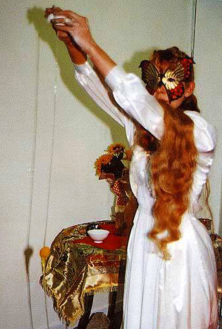
Living and working in Hong Kong brought Martie's studio inquiry into direct contact with Chinese ceramic culture. She created kiln-god/dess themed performances and shrine-like sculptures while researching Fan Tai Sin (Fan Sin Kung), Hong Kong’s surviving pottery- and kiln-god tradition, and its relationship to the former Wun Yiu ceramic community. Her 1997 and 1998 performances transformed research into ritualized artistic action.
Kiln Priestess performance, Hong Kong.Kiln Priestess self-portrait.Psychic Cornucopian Kiln Goddess.
03
Jingdezhen · 1999–2000
Feng Huo Hsien and the Blessed Potters' Temple
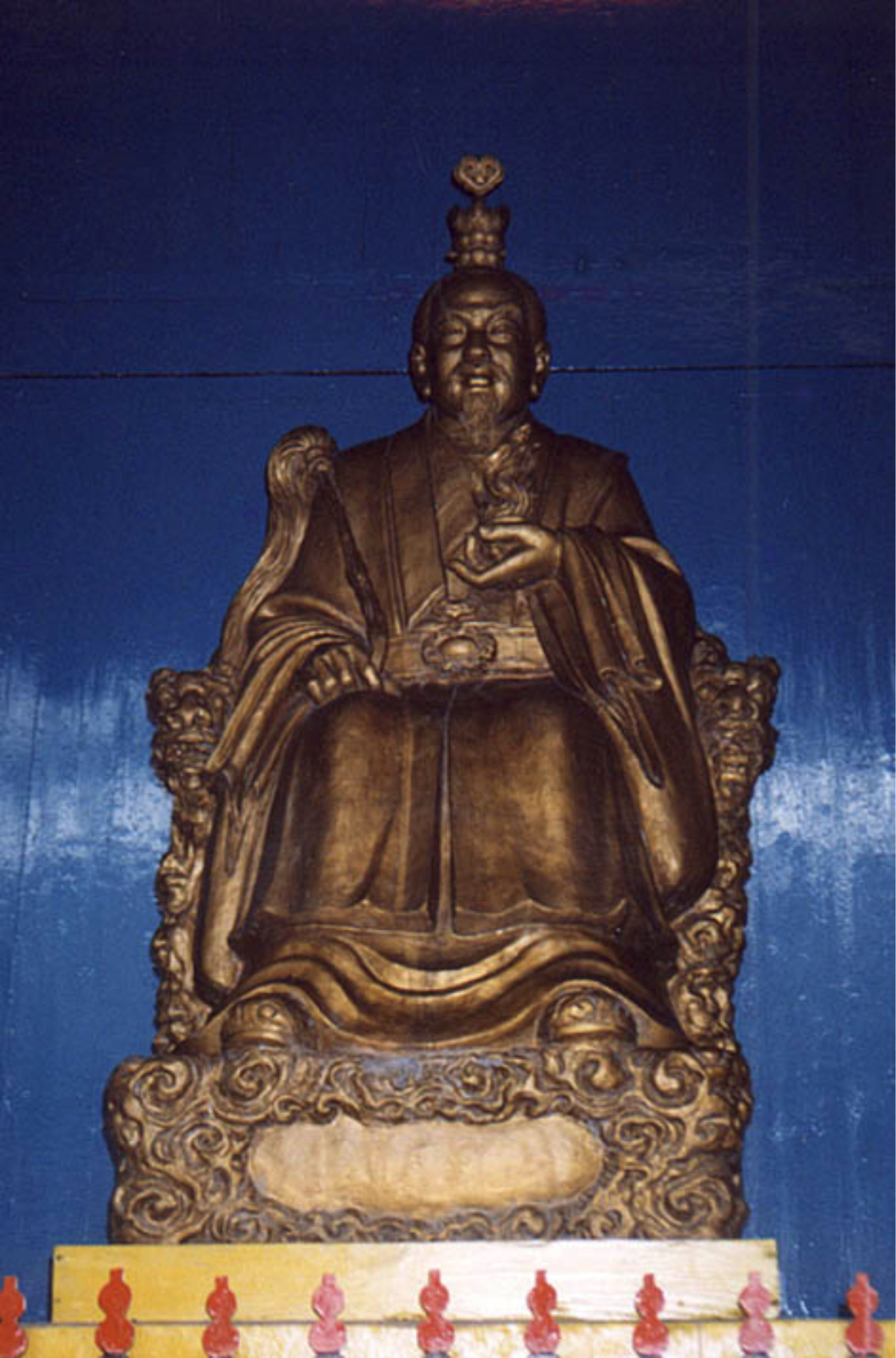
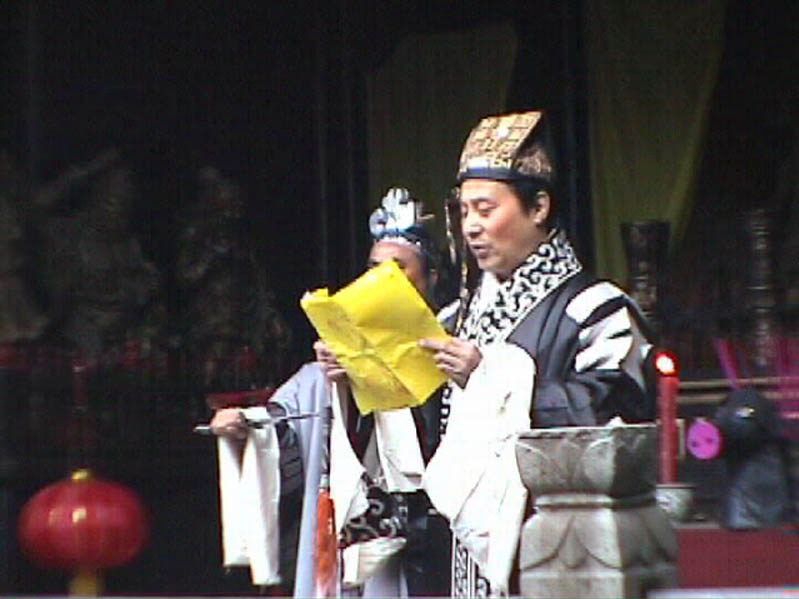
In Jingdezhen, Martie pursued physical and oral evidence of Feng Huo Hsien, the kiln deity associated with the celebrated porcelain center. Fieldwork at the Ancient Porcelain Factory and Blessed Potters' Temple connected literary accounts with a living site of worship. Her documentation also addressed the loss of temples and cultural records during twentieth-century political upheaval.
Blessed Potters' Temple, Jingdezhen.Feng Huo Hsien research in Jingdezhen.Theatrical performance honoring Feng Huo Hsien.
04
Shiwan/Foshan, China · 2008 - 2011
Pottery Master Gods and ancient kiln sites
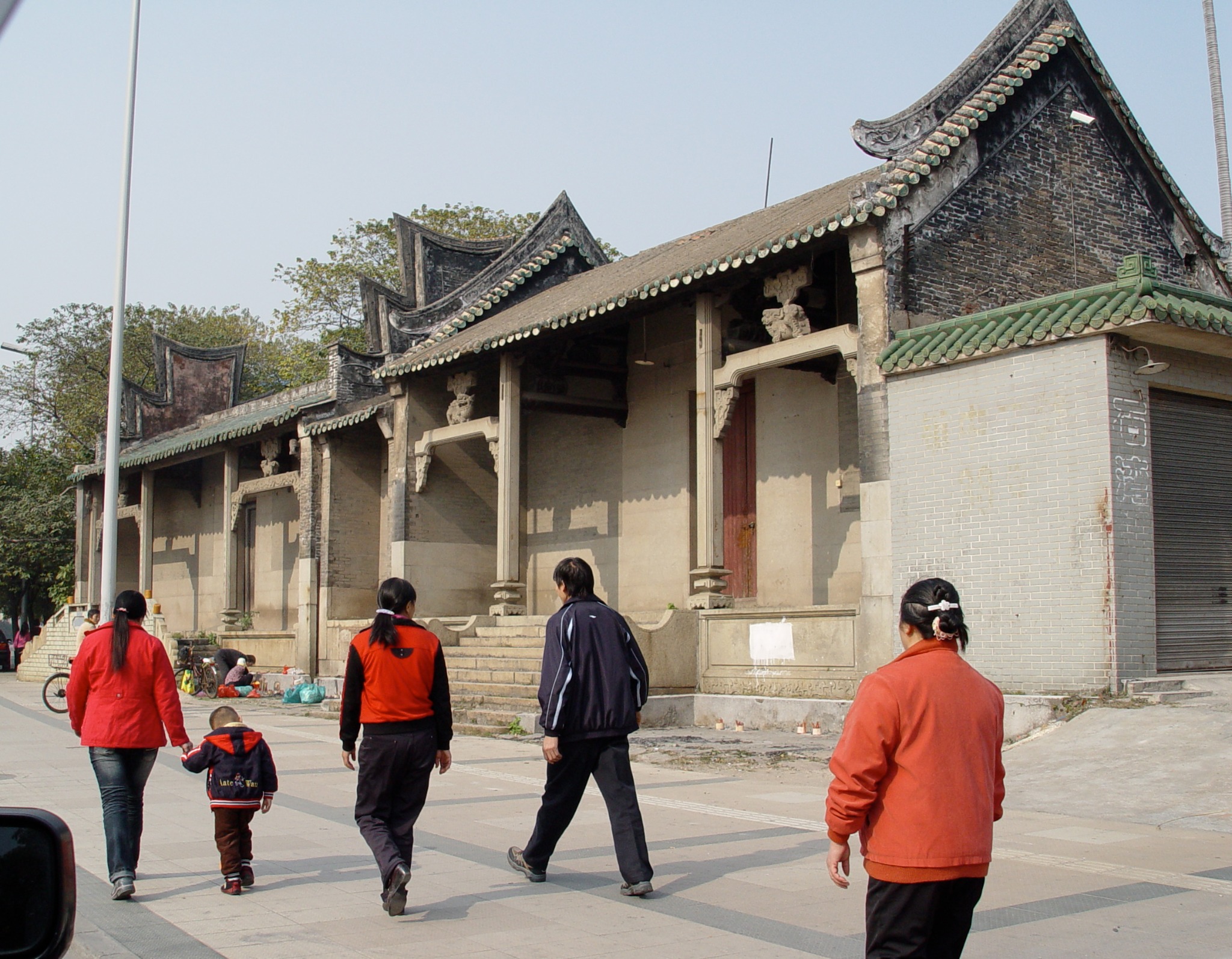
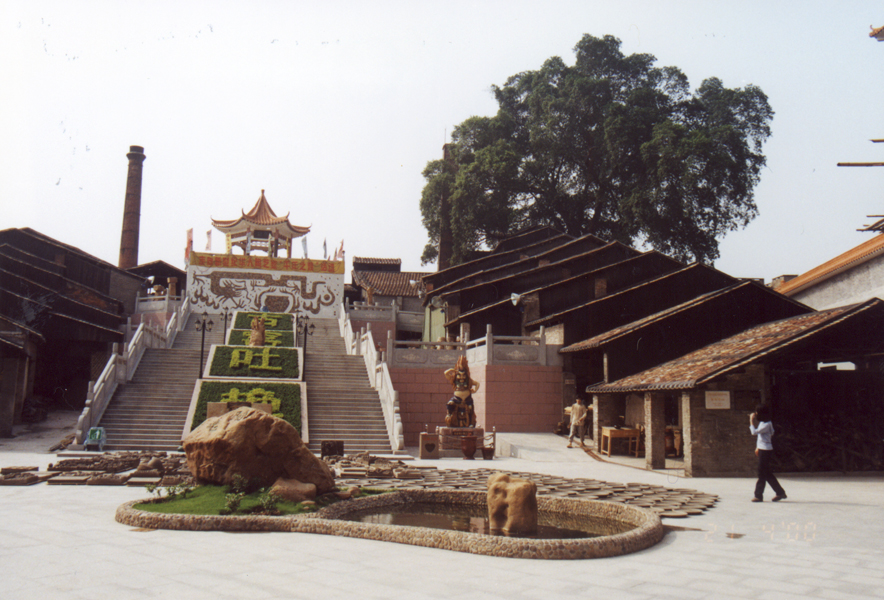
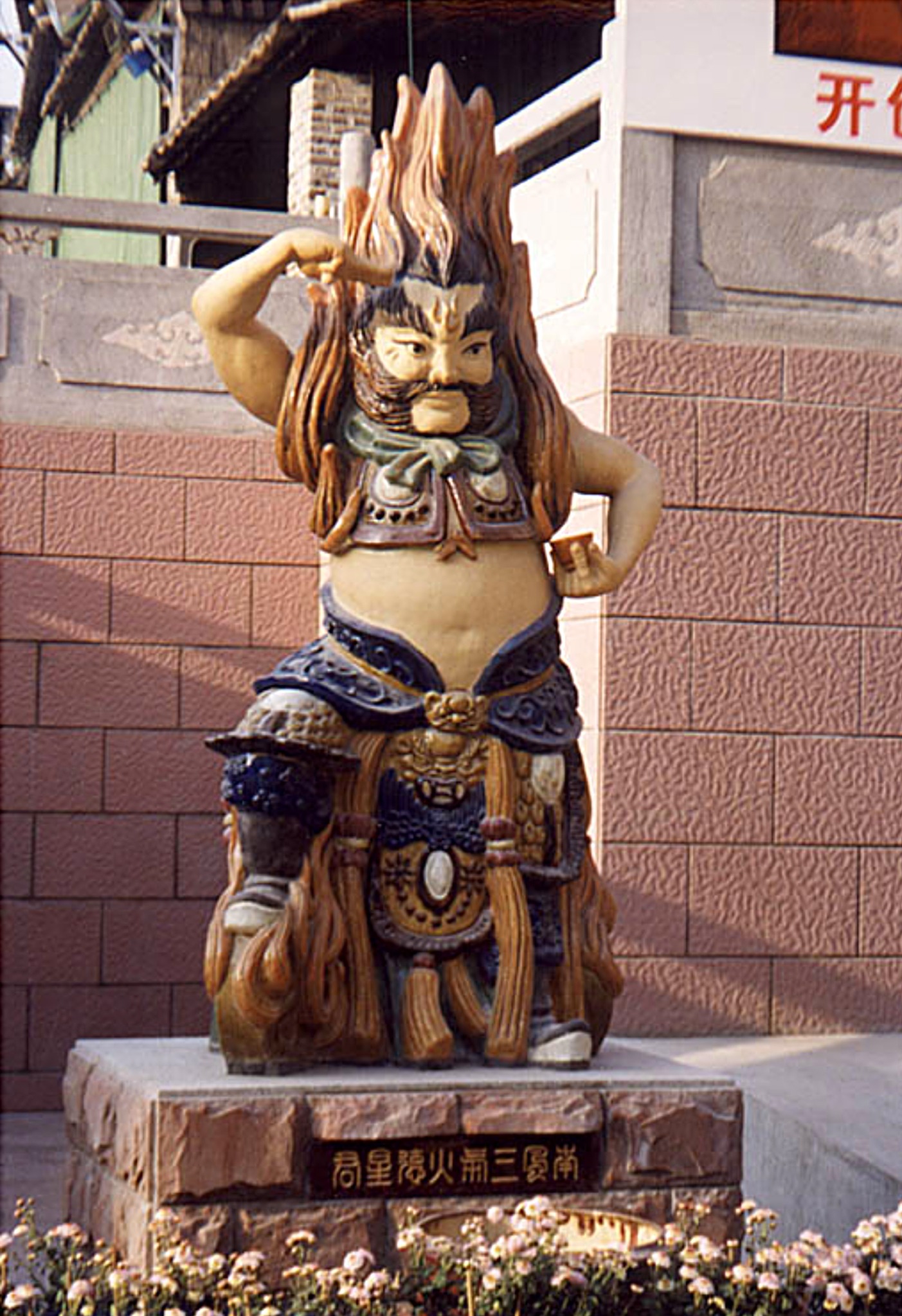
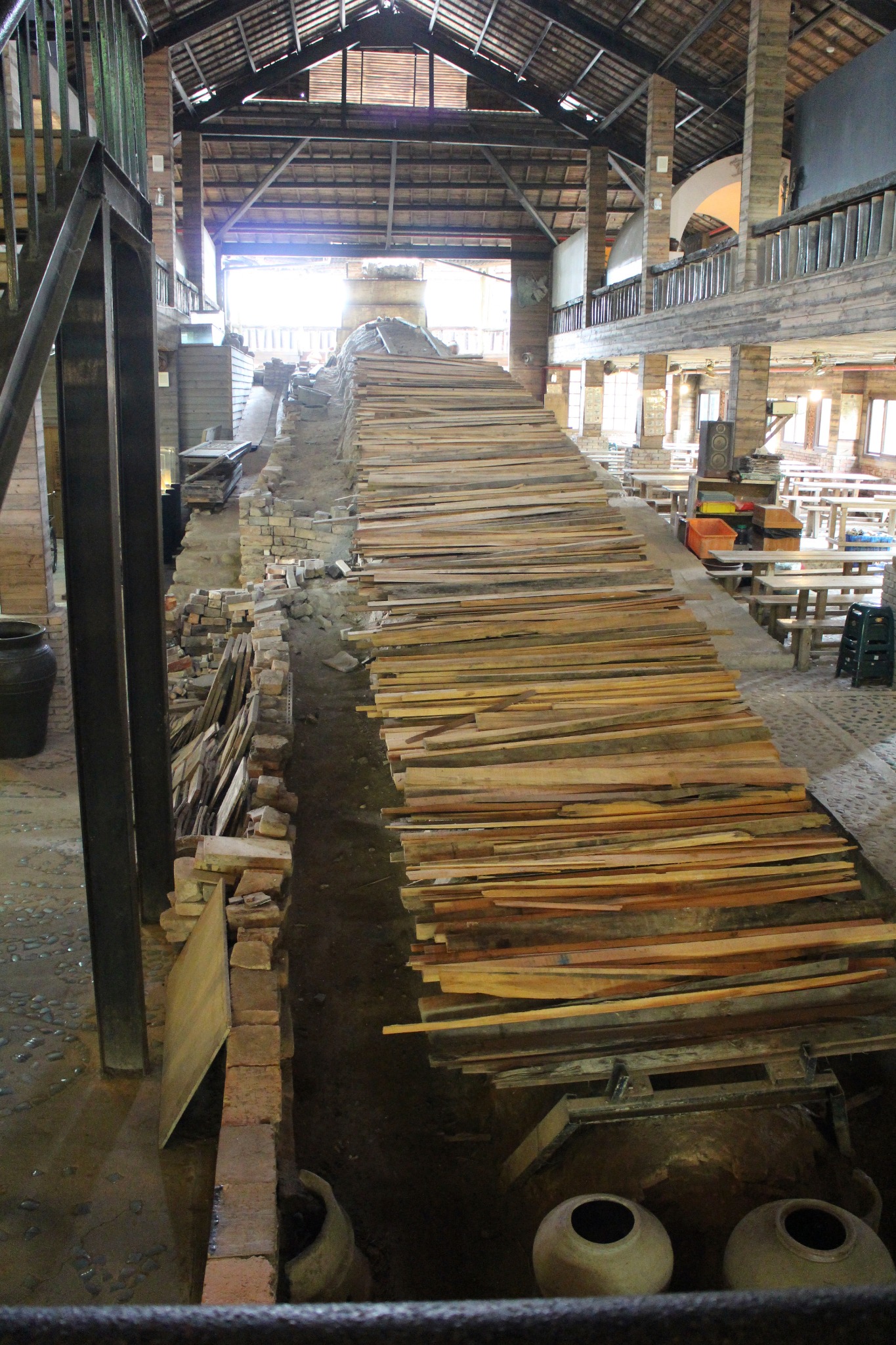
Research in the Shiwan and Foshan region expanded the study beyond a single deity. Martie documented the Taoshi Zumiao, the Nanfeng ancient kiln, and local ceramic guardians, comparing regional forms of worship and the ways deities become attached to particular communities, production histories, and kiln sites.
Taoshi Zumiao, Shiwan.Nanfeng Ancient Kiln, Shiwan.Fire God of the South Wind Region created by Mei Wending, Shiwan.
05
Taiwan · 2013
Lo Ming, snake kilns, and cultural memory
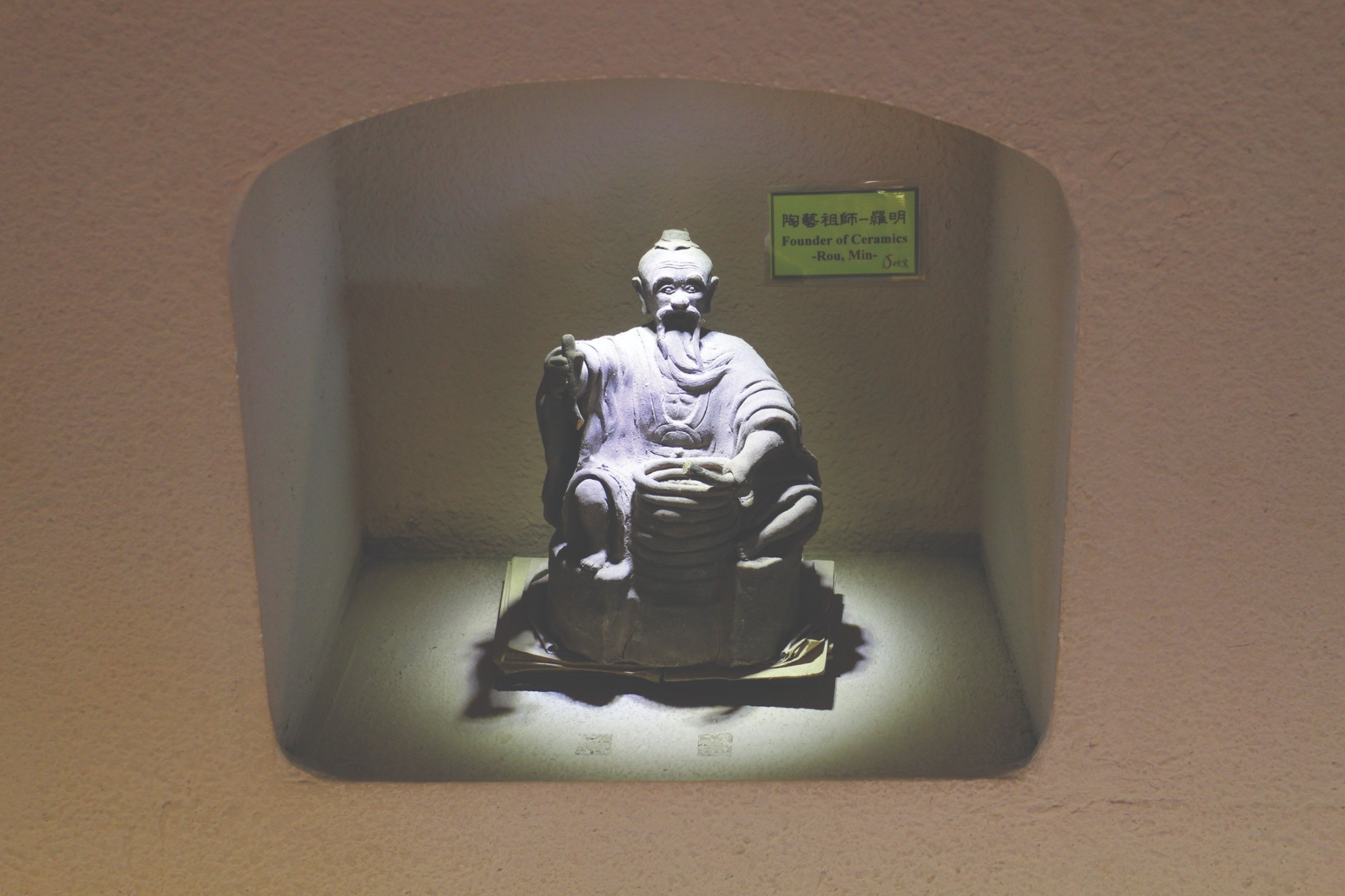
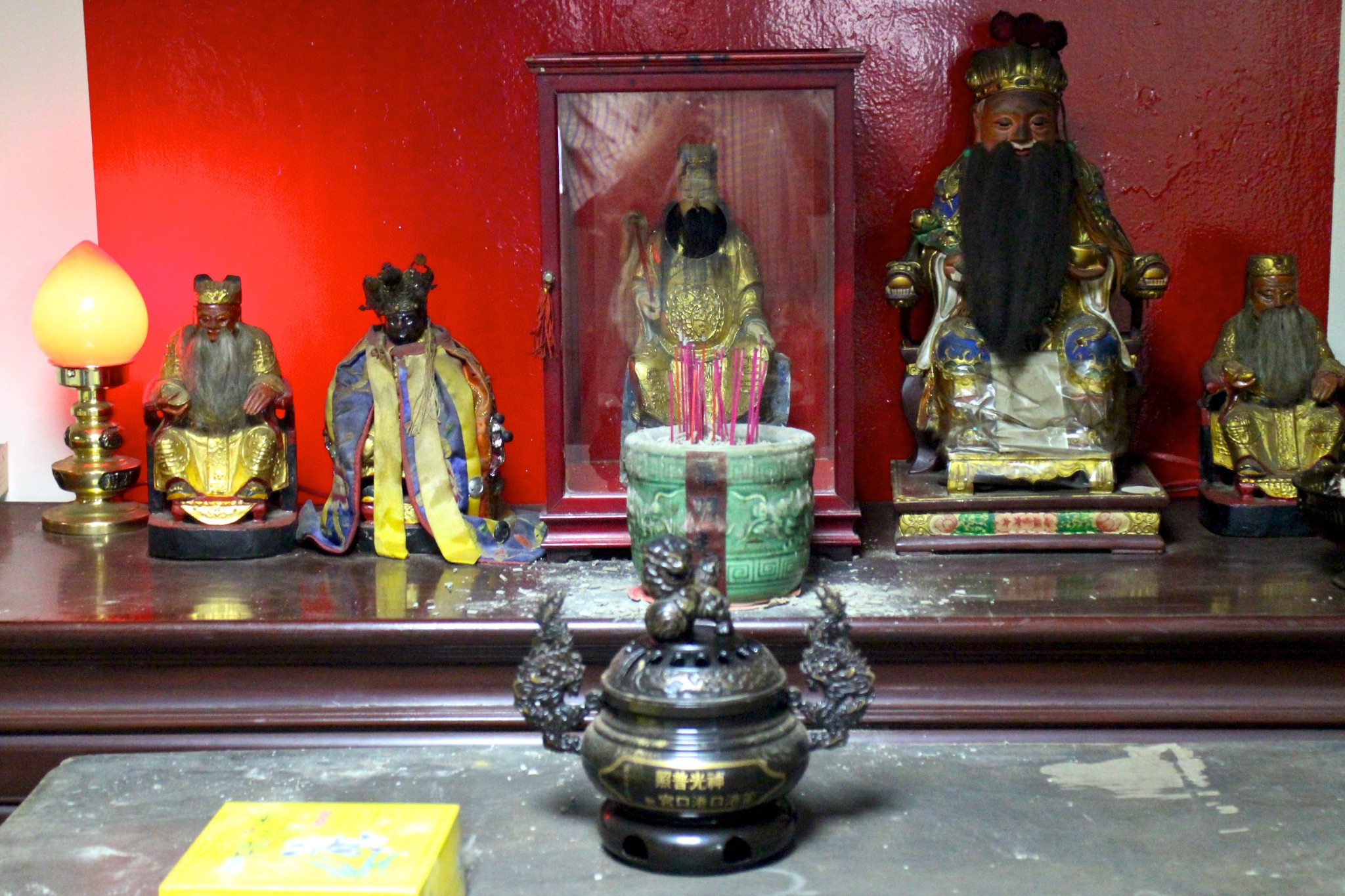
A Visiting Research Fellowship at National Taiwan University of Arts allowed Martie to extend the project into Taiwanese kiln lore. Her research considered Lo Ming and Lo Wen, changing pottery-god customs in Yingge, and the Shui-Li Snake Kiln as a site where ceramic history, tourism, ritual memory, and contemporary practice intersect.
Shui-Li Snake Kiln.Kiln god, Rou Min, statue at Shui-Li.Lo Ming altar, Yingge.
06
Singapore · 2013–2018
Dragon kilns and the preservation of firing heritage
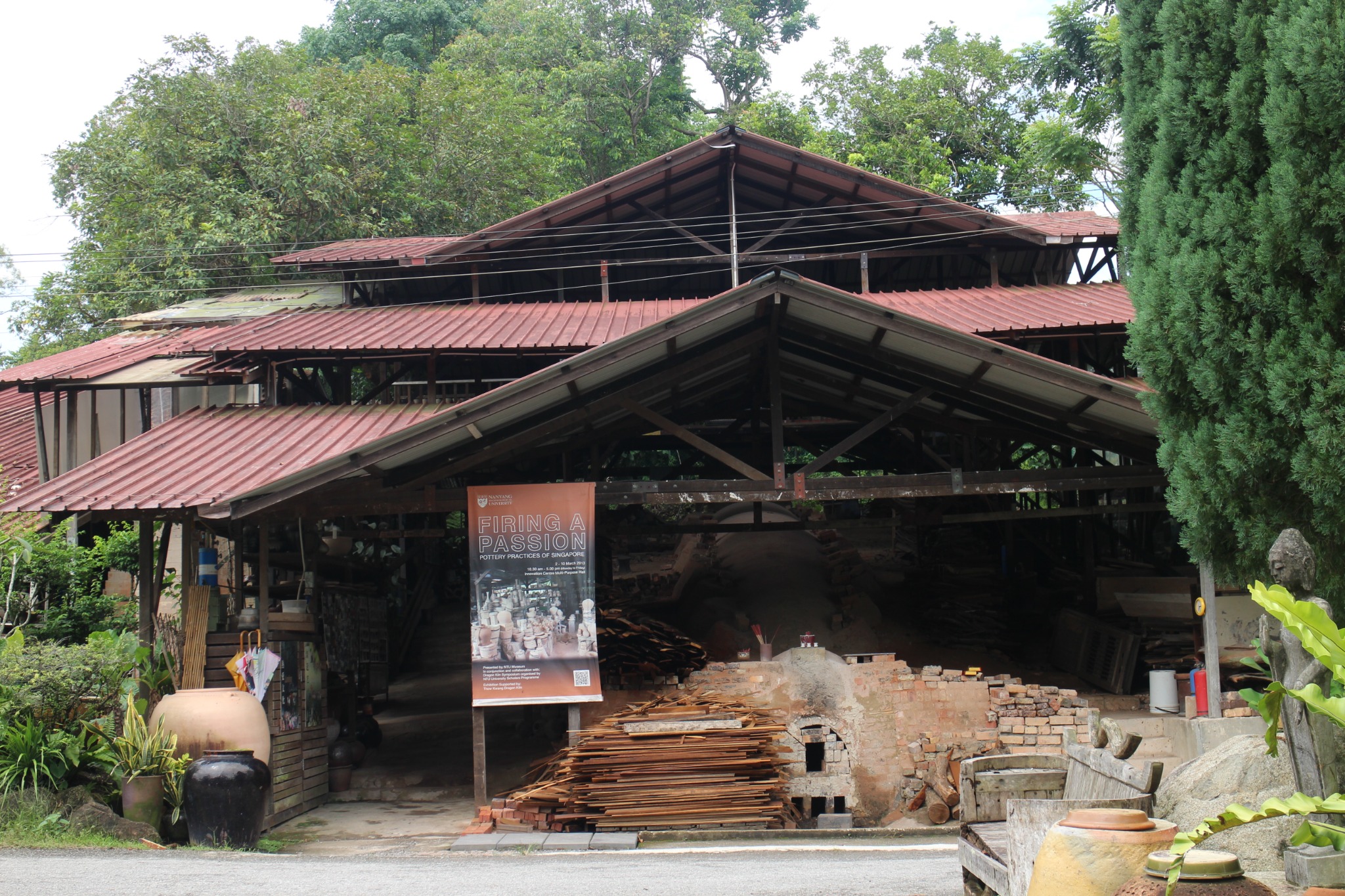
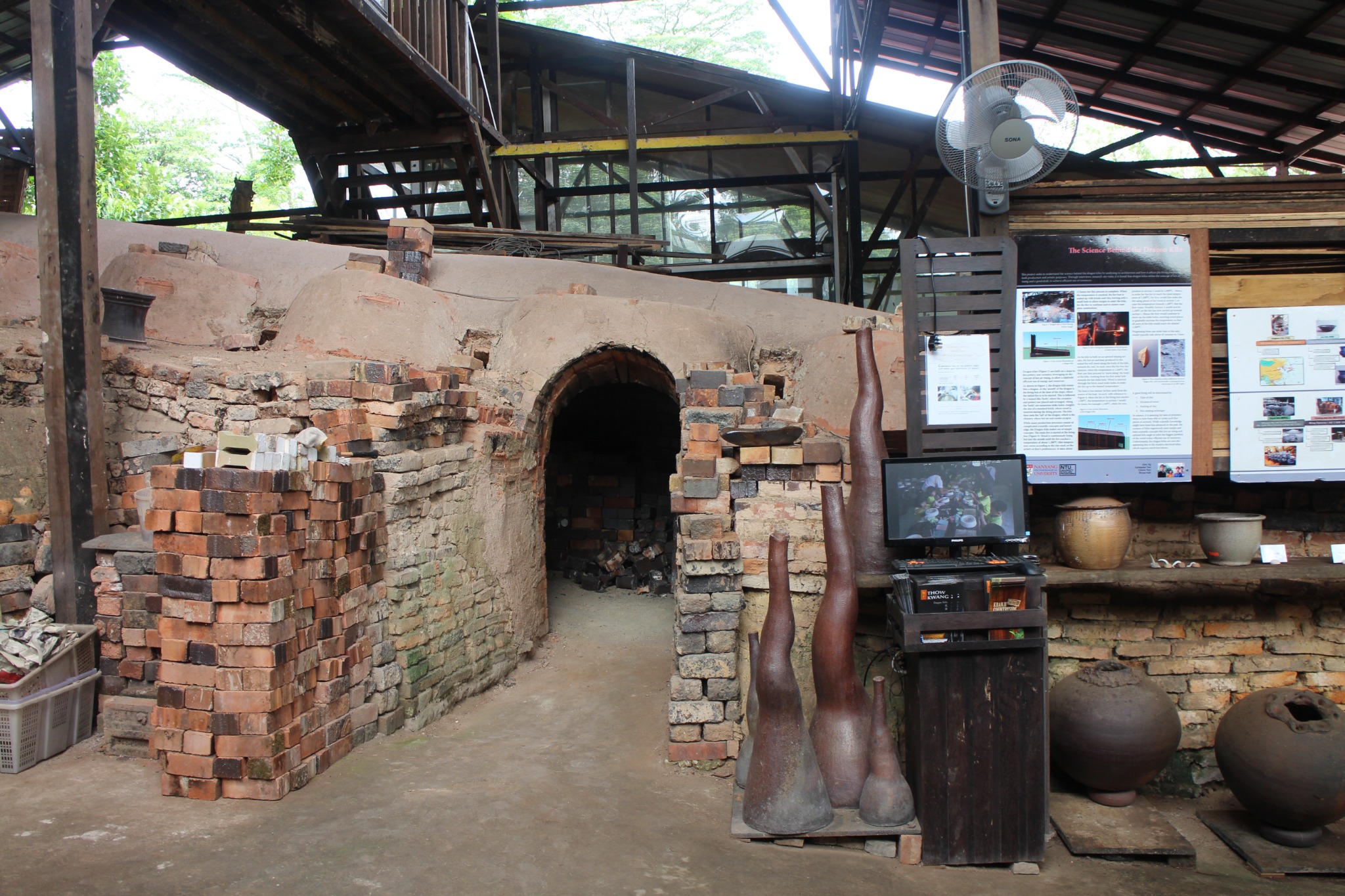
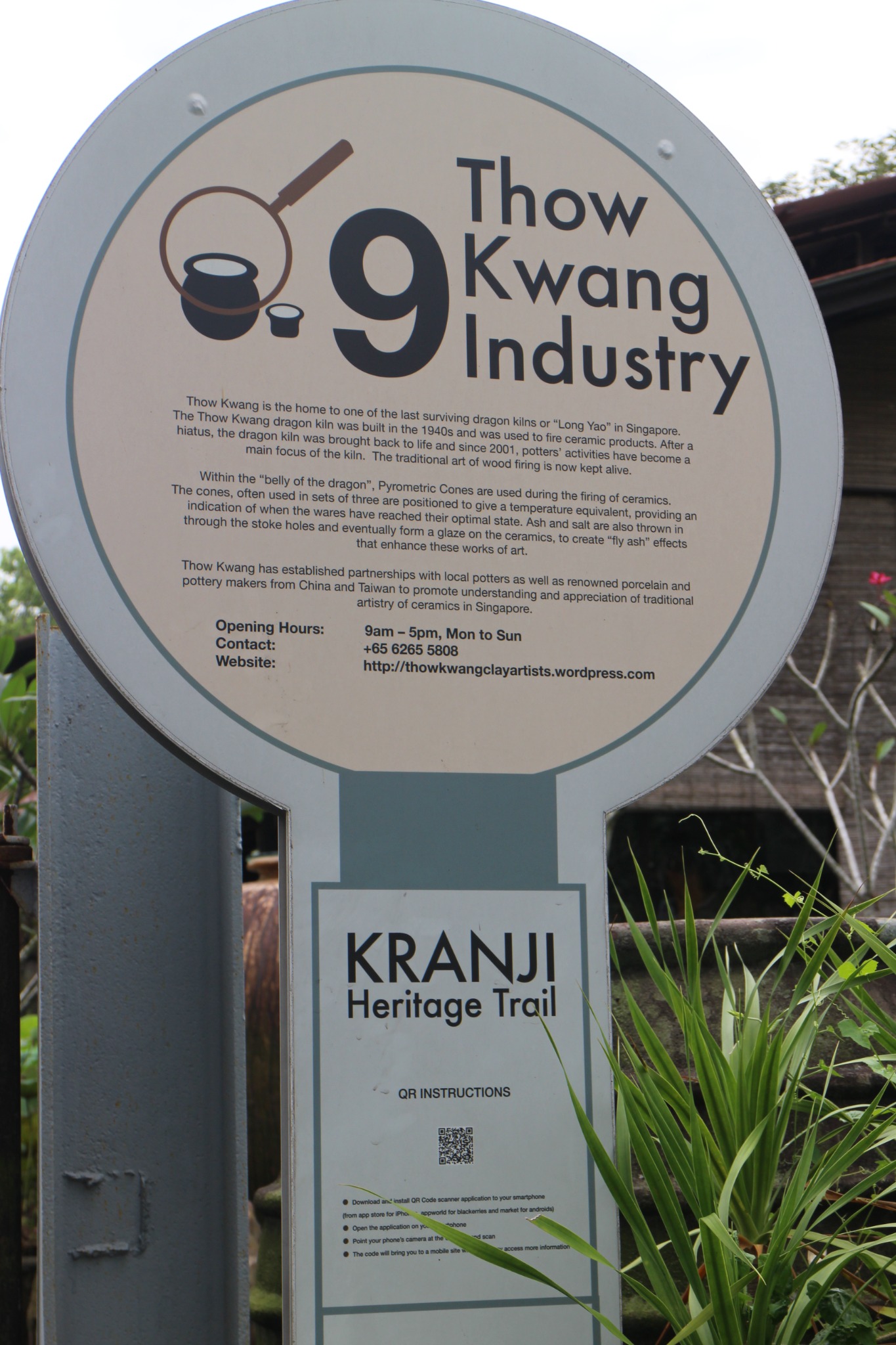
While based in Southeast Asia, Martie also studied Singapore's surviving dragon-kiln culture, particularly Thow Kwang and the Jalan Bahar / Guan Huat kiln. Her writing documents wood firing as living heritage and the people working to preserve kiln knowledge amid rapid urban change.
Thow Kwang Dragon Kiln.Architecture of the dragon kiln.Documenting kiln history and heritage.
Research Culmination · 2012
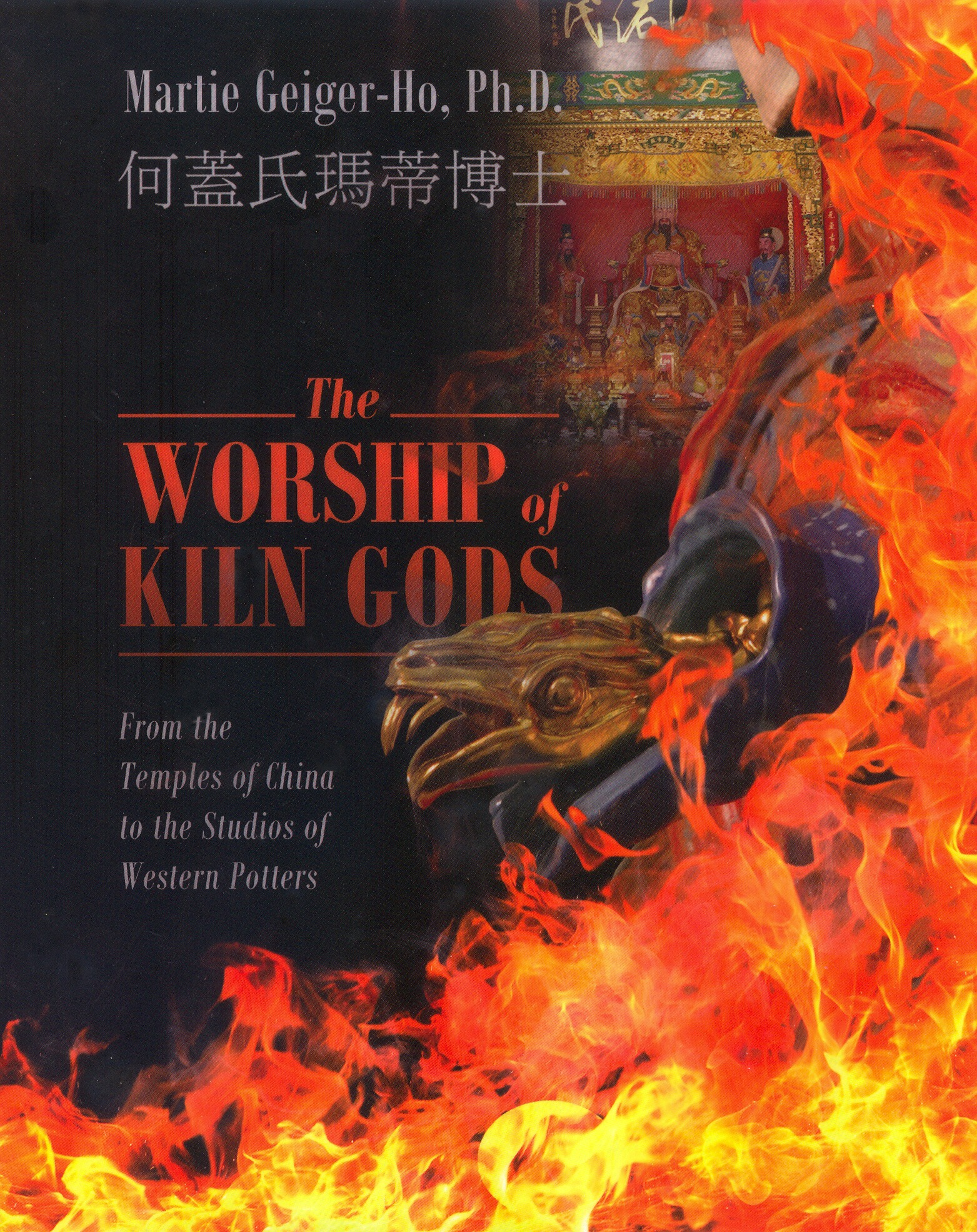
The Worship of Kiln Gods
From the Temples of China to the Studios of Western Potters
The book brings together Martie's fieldwork, historical and literary research, interviews, ceramic experience, and investigation of how kiln-god traditions have been understood in China and reinterpreted in Western studio ceramics. It includes research on Jingdezhen, Shiwan/Foshan, Hong Kong, Chinese kiln-lore folktales, and comparative practices in China and the United States.
Published in July 2012, it represents a major scholarly outcome of a research practice that continued through later fieldwork, articles, teaching, and ceramic making.
Epilogue · Medalta, Canada · 2016
Returning a kiln guardian to the kiln
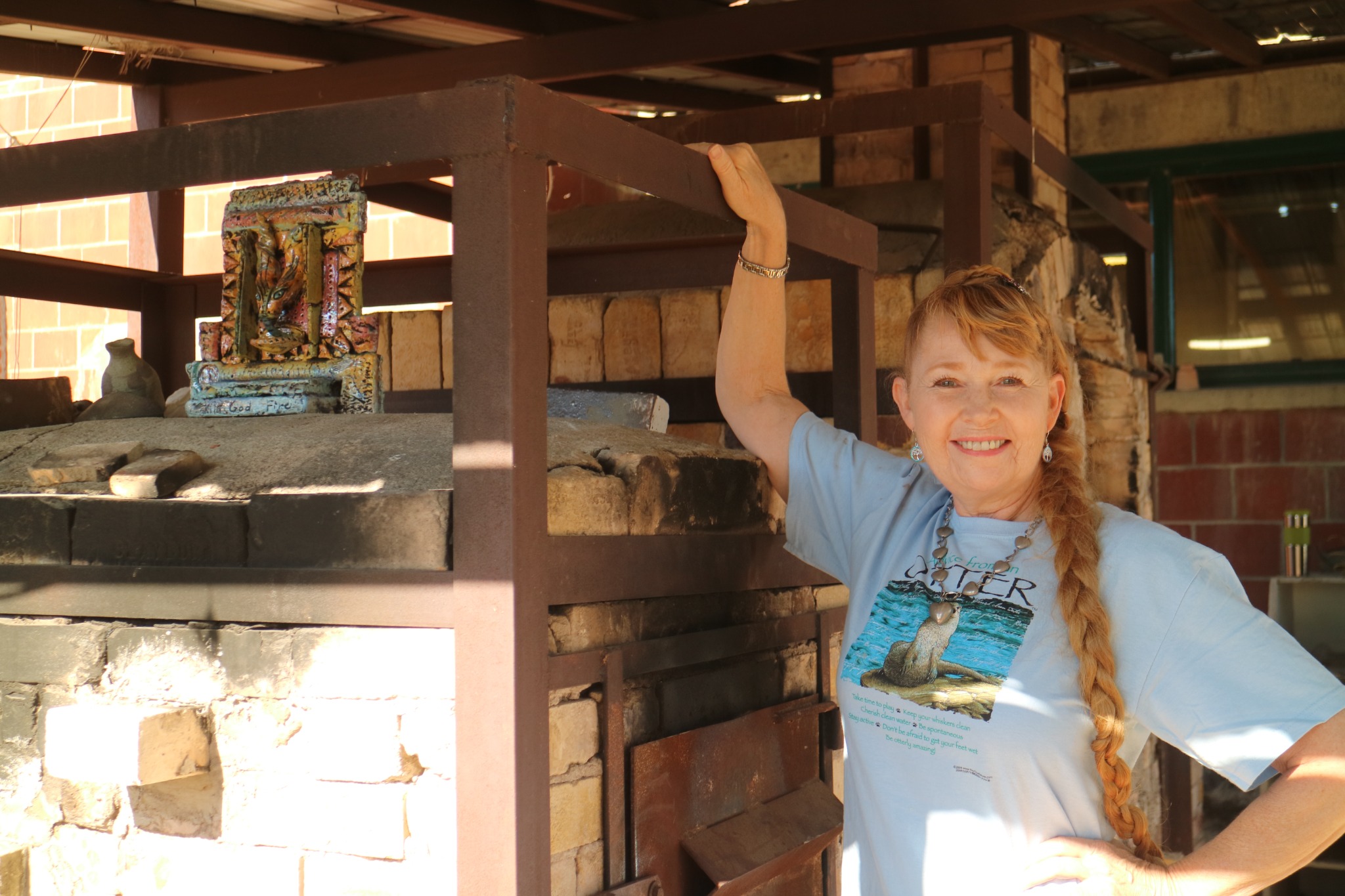
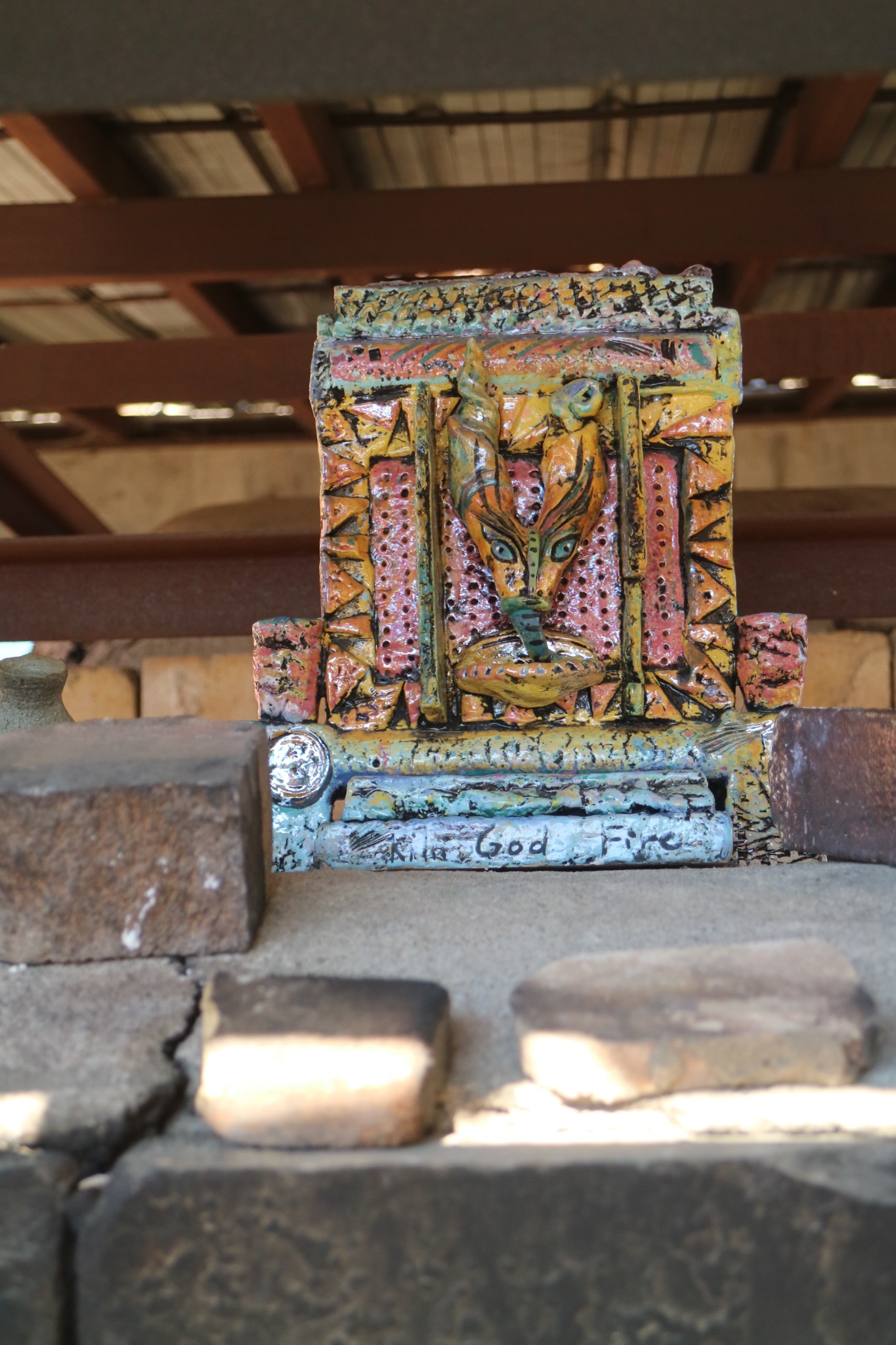
During an Atmospheric Firing Workshop at Medalta in Medicine Hat, Alberta, Martie donated one of her ceramic Kiln God sculptures to the historic ceramic site. Placed on a working kiln, the figure created a quiet continuation of the research: a contemporary guardian returned to an environment of clay, communal firing, and fire.
The gesture links decades of inquiry—from American studio ritual and Chinese field research to Martie's own sculpture and writing—and demonstrates how kiln lore continued to inform her ceramic life long after the completion of her doctoral study and book.
Martie with her Kiln God at Medalta, 2016.The donated Kiln God positioned on the kiln.
Research as Ceramic Practice
Martie began by searching for kiln gods. The search became fieldwork, scholarship, performance, sculpture, publication—and an enduring way of understanding the relationships among potters, fire, belief, and place.
For inquiries about kiln god traditions, kiln lore, related research, or Martie Geiger-Ho’s publications and fieldwork, please contact Martie at kilnlore@gmail.com.
Martie’s kiln-god research, publications, field documentation, and original interpretations represent many years of scholarly and creative inquiry. When referencing or building upon this work, please credit Martie Geiger-Ho and cite the relevant publication or research source.